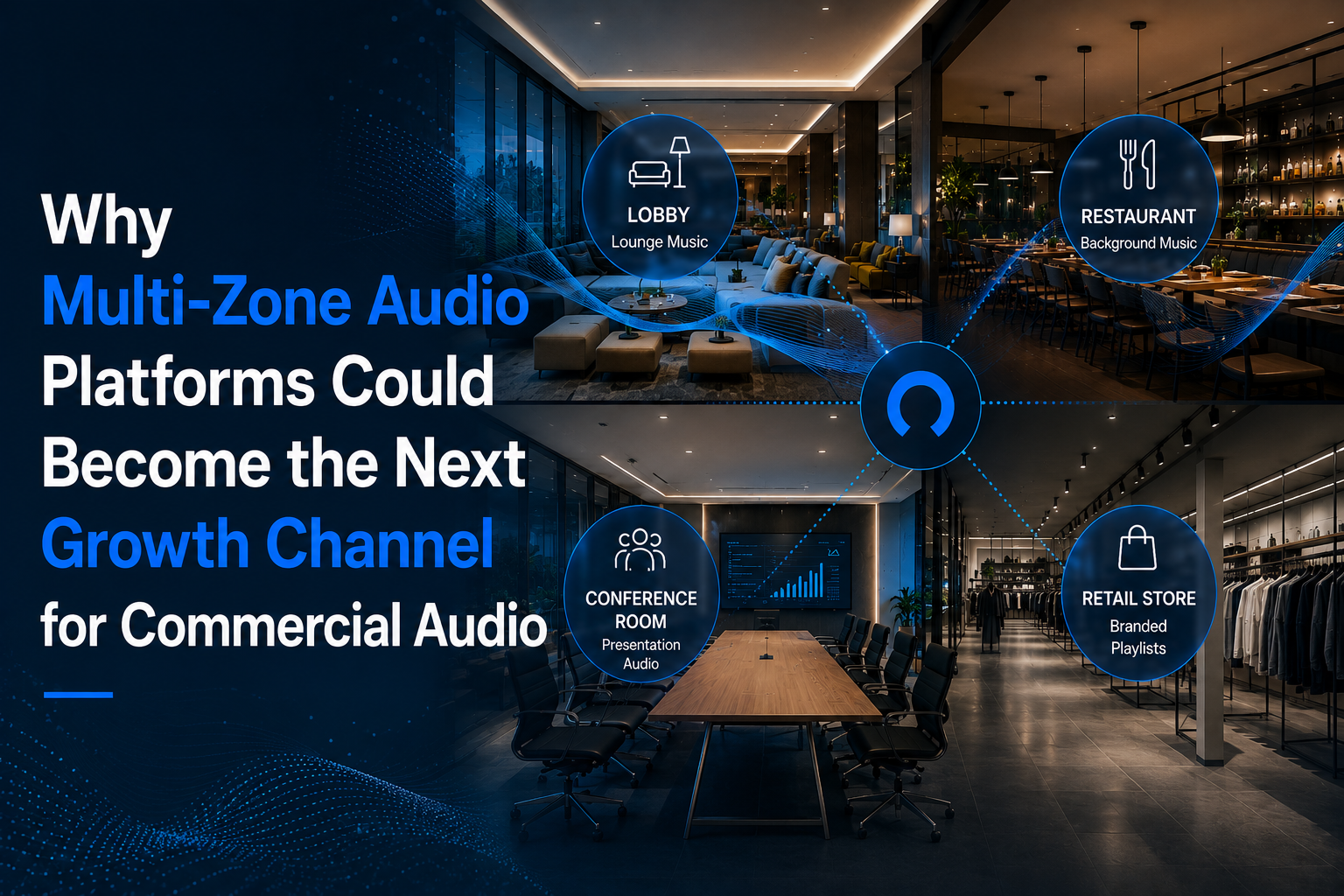
Why Multi-Zone Audio Platforms Could Become the Next Growth Channel for Commercial Audio
By Darren Ma, Ph.D., an expert in multi-zone commercial audio systems and smart building integration
From Infrastructure to Experience Distribution
For decades, commercial audio has focused on moving sound reliably through buildings.
Amplifiers became more powerful. DSP platforms became smarter. Network infrastructure became robust. Integrators perfected the art of delivering clear sound to every corner of a venue.
Yet as commercial environments evolve, a new challenge emerges:
It’s no longer just about delivering audio—it’s about orchestrating experiences.
Modern businesses want tailored audio for every space—lobbies, gyms, conference rooms, retail floors, restaurants, lounges—without multiplying hardware or complicating management.
This is where multi-zone audio platforms shine.
The Traditional Deployment Model
Historically, background music or commercial audio systems required:
- Multiple playback devices
- Independent subscriptions for each zone
- Separate scheduling and control systems
- Complex wiring and routing
While functional, this model creates fragmentation. Each zone becomes a silo, making updates, scheduling, and centralized control a challenge.
Multi-Zone Platforms: One System, Many Experiences
Centralized multi-zone audio platforms allow a single system to deliver multiple independent audio streams simultaneously across multiple zones.
Consider a modern fitness center:
Zone | Audio Experience |
Reception | Welcome & lounge music |
Cardio | High-energy workout playlists |
Strength Area | Motivational music |
Group Exercise | Instructor-specific content |
Yoga Studio | Ambient & relaxation music |
Spin Room | High-BPM cycling playlists |
Locker Rooms | Background music |
Café / Social Area | Lifestyle playlists |
All of these experiences can run simultaneously, fully managed from one system, eliminating the need for multiple playback devices, separate subscriptions, or duplicated infrastructure.
Why This Matters for Integrators and Operators
For integrators, multi-zone platforms transform the conversation:
- From selling hardware, wiring, and installation
- To designing immersive audio experiences across an entire building
Operators benefit too:
- Consistent brand experience across all areas
- Flexible scheduling and zone-specific playlists
- Reduced hardware footprint and simplified maintenance
- Centralized management for multi-site operations
By decoupling audio experiences from individual playback devices, multi-zone systems allow operators to scale, adapt, and optimize their audio environment efficiently.
The Smart Building Opportunity
As buildings become smarter, audio can integrate with other systems:
- Lighting and HVAC
- Occupancy sensors and room scheduling
- Digital signage and environmental automation
This opens the door for audio to respond dynamically: playlists adjust based on time of day, room occupancy, or the type of activity happening in a space.
Audio becomes part of the overall experience ecosystem, rather than a standalone service.
Looking Ahead
The commercial audio industry has perfected the transport of sound.
The next frontier is experience orchestration.
Multi-zone audio platforms make it possible to deliver multiple independent, simultaneously managed audio experiences from a single system. They unlock new operational efficiencies, improve guest and customer experiences, and offer integrators a higher-value proposition.
In the coming years, buildings—not individual devices—will define the scale and impact of commercial audio systems.
The right experience, in the right place, at the right time, will no longer be an aspiration—it will be the standard.
For more information, visit the official OpenAudio website: www.openaudio.io.